energy
Increase production. Optimize Opex. Reduce emissions. At the same time.
Oil and gas systems are complex, interdependent, and continuously changing. The goal is simple: Maximize production, transport, and processing while operating inside operational constraints and growing environmental and regulatory pressure.
How Geminus Operates
Geminus models and optimizes your full system in real time.
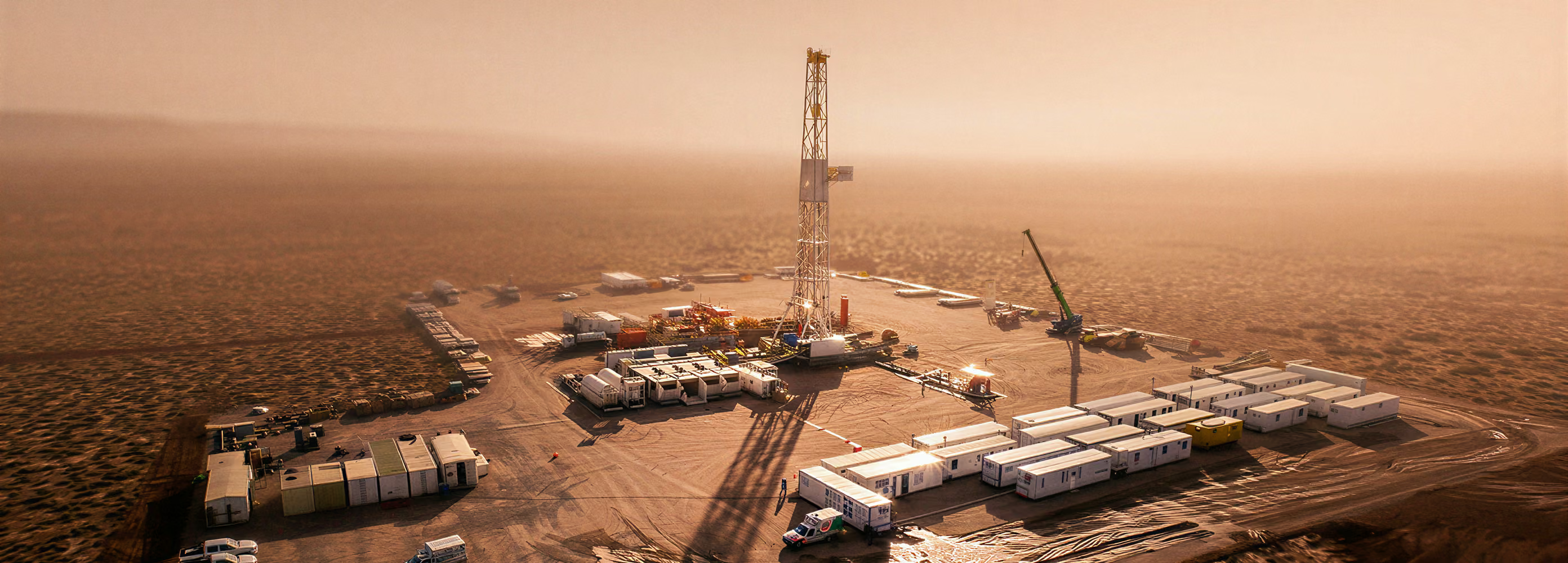
Well and Network Optimization - Onshore
Across hundreds of onshore wells, well, manifold, compressor, and facility dynamics shift faster than current tools and workflows can adjust, leaving the system running below optimum much of the day.
Geminus concurrently optimizes every well (ESP, gas lift, plunger lift, etc), manifold, and network choke setting, including rerouting options across the full network in seconds, all while honoring the constraints you set (like gas or liquid handling limits, pressure ratings, and/or variable sales prices at different points on the network). Available data (unstructured, process, simulation, real-time sensor) is transformed into a live decision engine. When a compressor goes down at 2 a.m., operators already have the optimal setpoints for that specific configuration, delivered in seconds. Field-validated at scale, including a public deployment with Hess in the Bakken.
Key Results
~5% production uplift at field level
Weeks to a month time-to-value
Eliminate unplanned flaring
Hess
Well & Network Optimization — Offshore
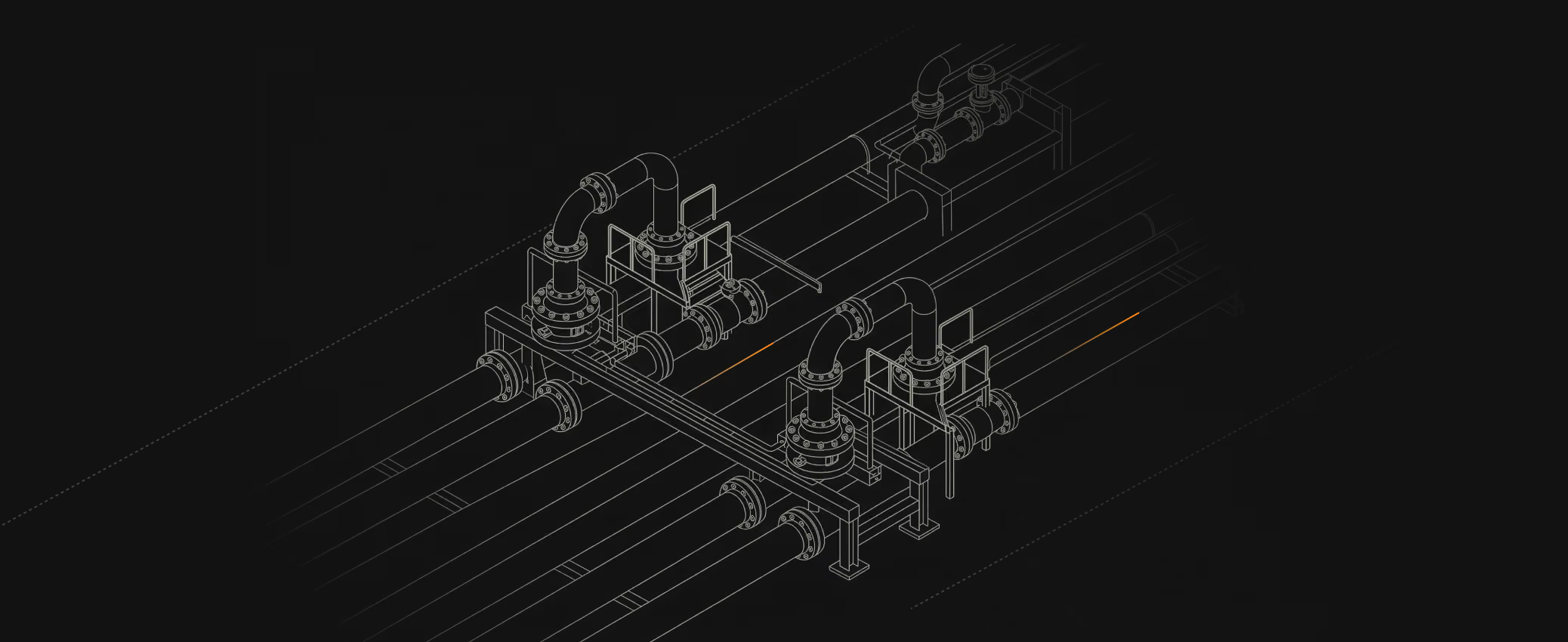
Subsea networks can be complex. Slugging hurts production and infrastructure. Your transient simulator takes an hour per scenario and still cannot characterize the flow regime well.
The Geminus model-data fusion approach delivers the first millisecond-scale slugging diagnostic: flow regime classified, instability quantified, stable operating point recommended. The same approach extends to gas lift allocation, distributing available gas across the network in real time to maximize production while avoiding hydrate formation.
Key Results
2% lift in production
~95% slugging classification
Millisecond response
First real-time slug diagnostic
Up & Midstream Unit Optimization
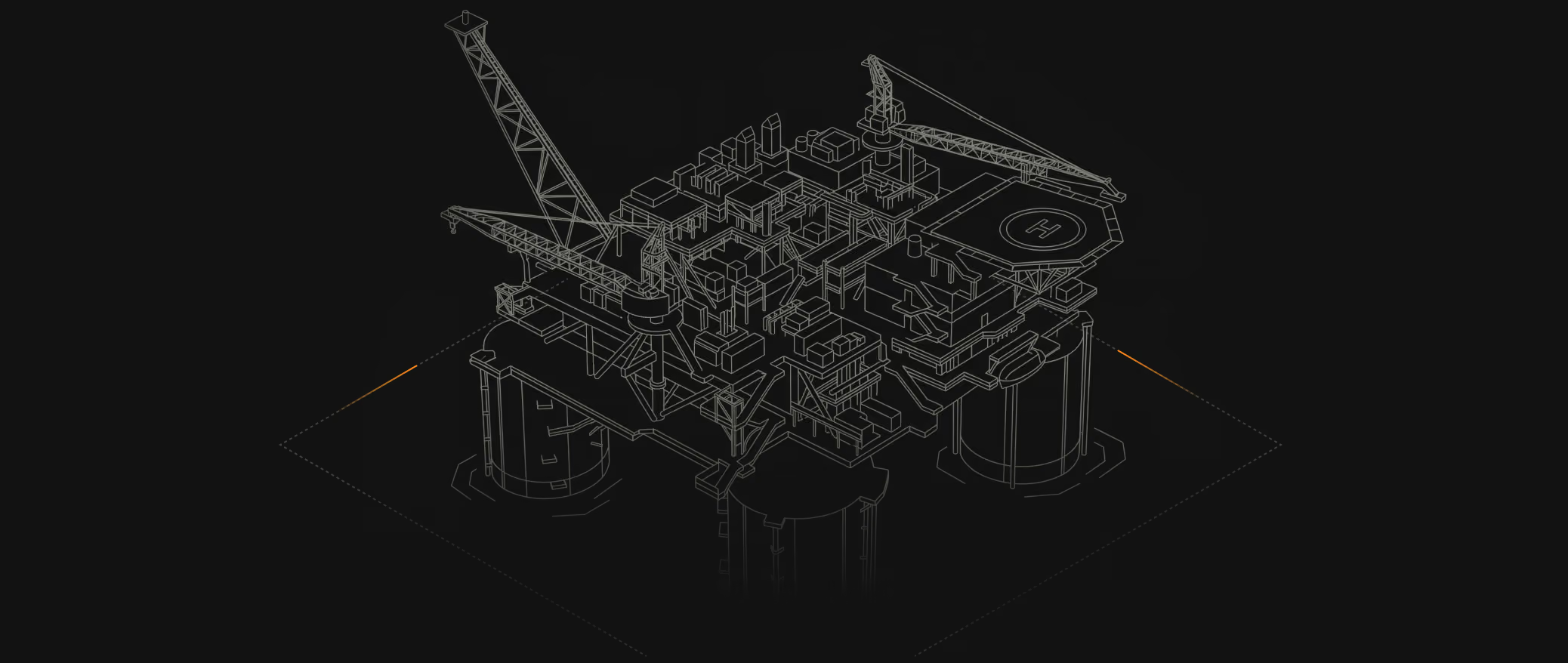
Produced-water disposal networks, amine units, TEG units, and NGL units all perform critical functions, but are often overlooked as optimization targets, leaving Opex savings unrealized.
Geminus turns your existing data into live optimizers: produced-water routes through your cost hierarchy automatically, while amine and TEG units find their minimum-energy operating point without compromising on-spec processing.
Key Results
Millions per year in disposal savings
per network
Sub-second amine optimization with 5% energy savings demonstrated
Refinery Unit Optimization
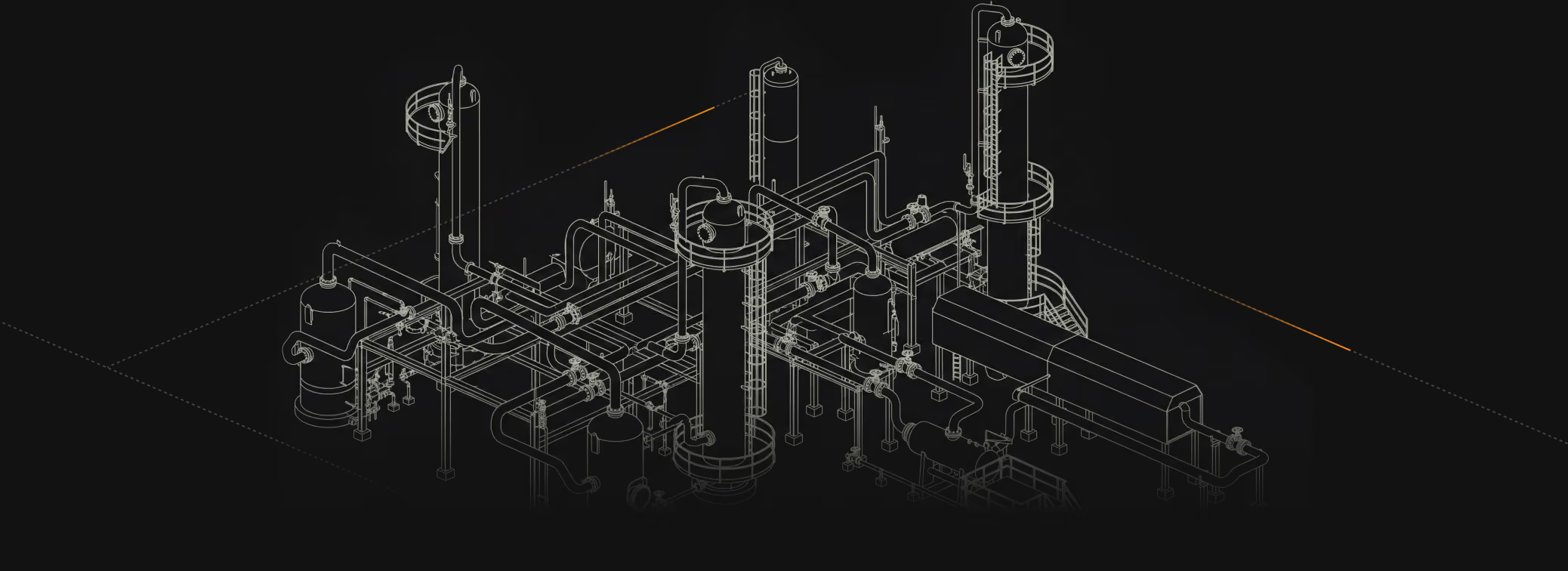
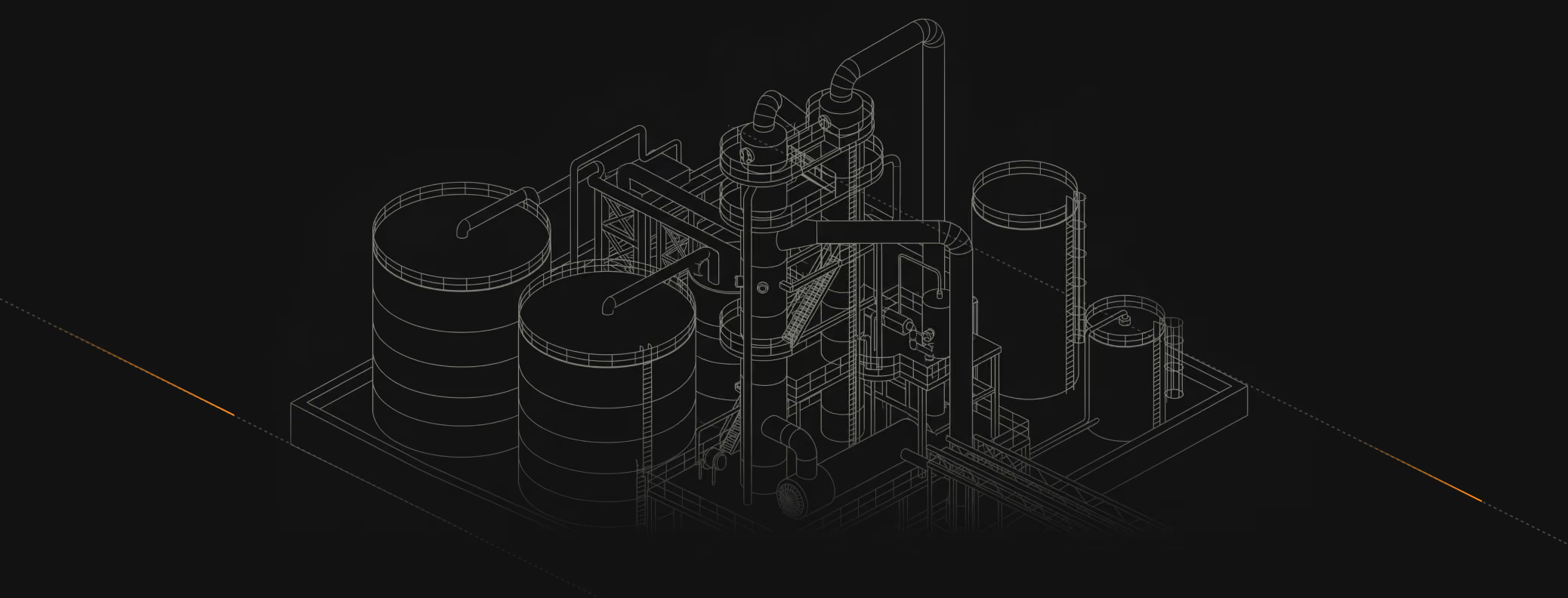
Fluid catalytic crackers, hydrocrackers, and hydrotreaters are major profitability levers in refining when run even slightly smarter than existing models allow. Reinforcement Learning (RL) approaches recognize the opportunity but are ill-suited to the high dimensionality of these units and the dynamic nature of feed changes and equipment changeouts.
Geminus unlocks your existing investment in chemical kinetic models, replacing them with high-fidelity surrogates that integrate directly into your existing RTO platform, continuously adapting as feeds and catalysts change, with deployment compressed from nine months to nine hours.
Key Results
1–2% yield uplift
<1s optimization
Deployment compressed from 9 months to 9 hours
$100M+ revenue increase
Autonomous closed-loop on FCC; Hydroprocessing deployment underway.
Tier 1 U S Refiner
LNG
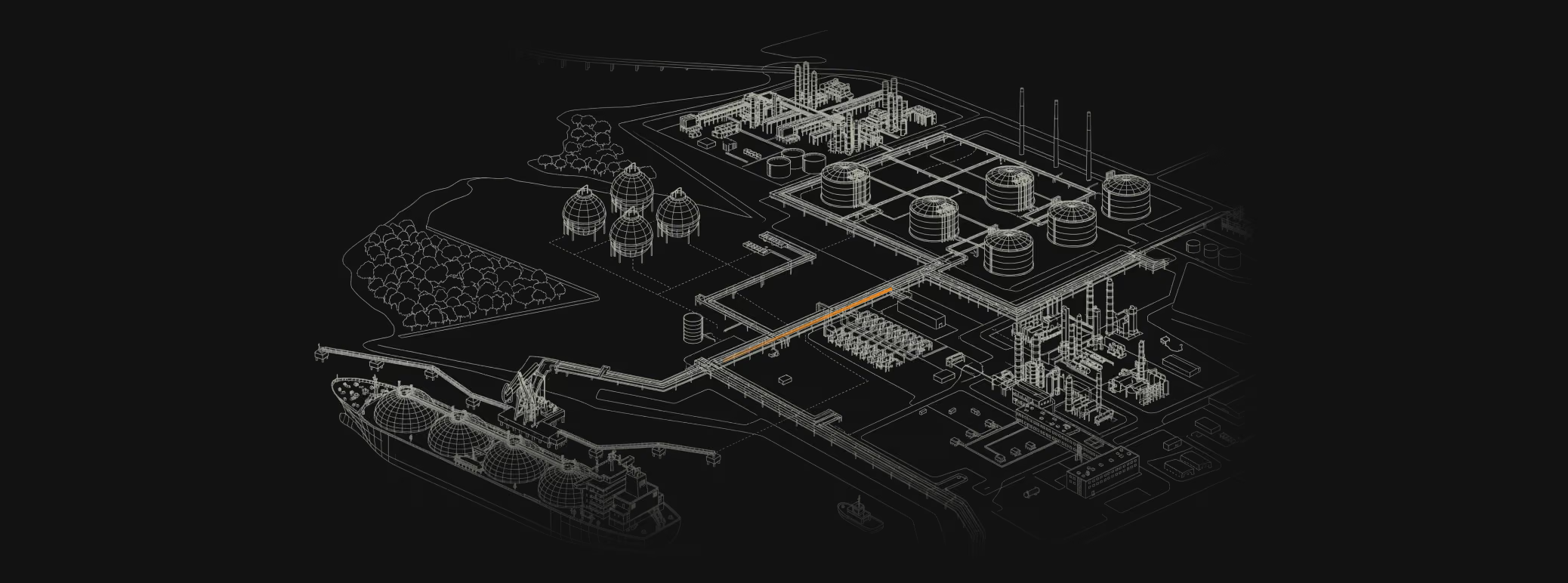
Across the entire LNG process, energy consumption is the dominant OPEX driver.
From feed gas pretreatment through liquefaction, fractionation, and NGL recovery, Geminus builds surrogates of your key processes that lower energy and fuel consumption without sacrificing throughput.
Where first-principles simulators are too slow for closed-loop use and data-driven models break down outside historical conditions, Geminus’ physics-native surrogates run fast enough for real-time optimization while maintaining credibility across the full operating range.
Key Results
1–3% reduction in specific power consumption across the liquefaction train
0.5–2.0% throughput uplift by identifying and relieving the binding constraint in real time
Early detection of compressor and heat exchanger degradation, days before unplanned trips worth $5M+ each
Deployed on your existing plant historian and control infrastructure. No new sensors. No new hardware.
What changes
Increased throughput across the system
Reduced methane flaring and emissions
Lower operational costs
Improved system stability under changing conditions

partners
Working with industry leaders
Geminus works with leading industrial giants to bring engineering superintelligence into live operations.
Together with partners such as SLB, we deploy physics-native AI across complex infrastructure to optimize performance, reduce risk, and deliver measurable advantage. These partnerships extend the platform across critical systems and accelerate the next generation of industrial capability.