WHO WE ARE
Trusted AI for the physical world
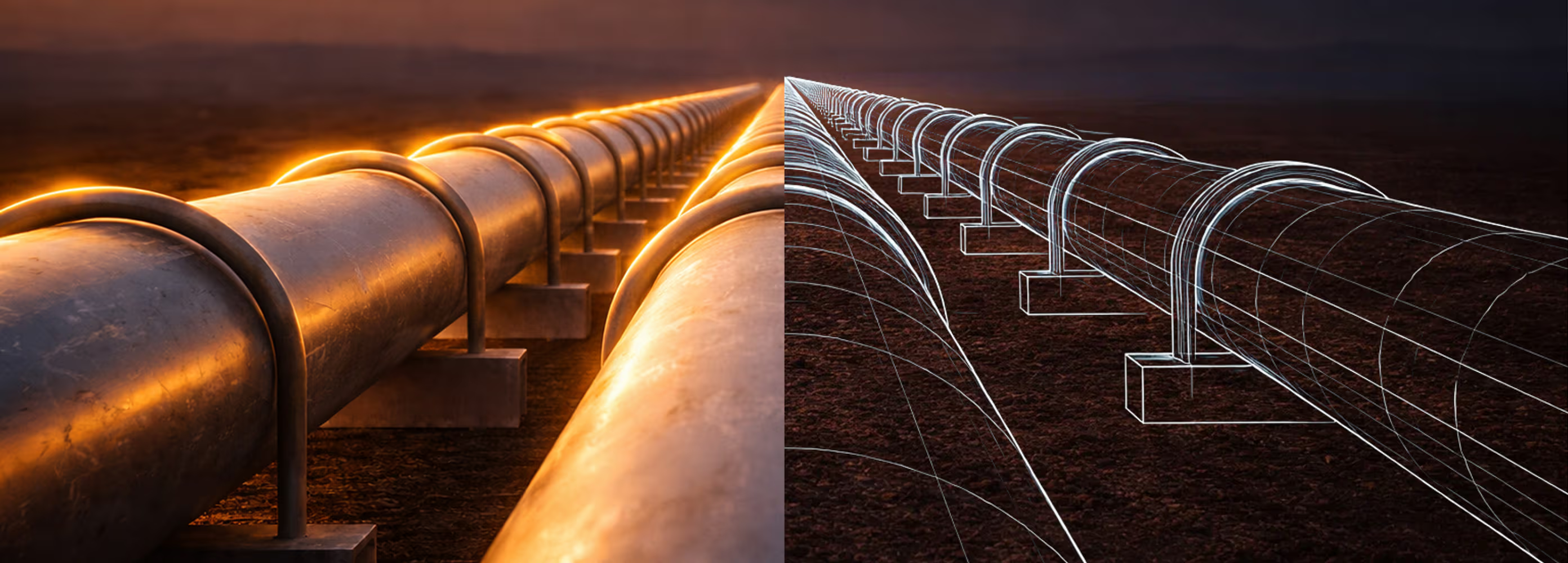
Modern industry runs on systems that cannot be fully observed, fully modeled, or fully controlled. When those systems fail, or simply underperform, the consequences are measured in safety, cost, and national security. Pattern-matching AI wasn't built for that. You can't train your way to an answer that history has never seen.
Geminus exists to change that.
We build physics-native AI that understands, predicts, and optimizes complex industrial systems in real time. Our models are trained on a combination of physics-based simulation and historical data. This gives them the ability to reason accurately about conditions that have never been observed before.
That capacity, to go beyond the boundaries of observed history, is what we've built at Geminus. We wrap those models in uncertainty-aware intelligence and compose them into multi-system configurations that capture how real-world infrastructure actually behaves: as interconnected, dynamic systems under constant pressure.
Our Story
From computational science to high consequence systems
Foundation: Computational Science
At the University of Michigan’s Institute for Computational Discovery & Engineering, Dr. Karthik Duraisamy and Dr. Alex Gorodetsky advanced physics-based modeling, uncertainty quantification, and scientific machine learning for systems that cannot be directly observed or tested. That work became the foundation for Geminus.
The Shift: Scientific Machine Learning
Deep learning gave computational scientists a new instrument, combining with or training on physics-based simulations to run orders of magnitude faster without specialized infrastructure. Powerful, but limited. These models remained idealized and unable to reason or act across complex, uncertain systems.
The Breakthroughs: Fusing simulations with real world data. Reasoning under uncertainty across multiple systems
The central challenge in deploying AI on physical systems is the sim-to-real gap. Models trained in simulation fail under real-world conditions. Geminus addresses this by combining physics-based simulation with real-world data, keeping models grounded as systems evolve.
The second challenge is uncertainty. Industrial systems are never fully observed. Sensors fail, data is sparse, and conditions drift. Most AI ignores what it does not know. In high-consequence systems, that is a liability. Geminus embeds uncertainty-aware reasoning grounded in US DOE and DoD science, enabling systems to act with awareness of both knowns and unknowns.
These models are composed across systems, capturing how infrastructure behaves as interconnected networks where interactions define performance, risk, and failure.
Deployment: From Theory to Operations
Geminus is not experimental.
Together with leading energy, industrial, space, and defense institutions, our systems are deployed across complex infrastructure, delivering measurable improvements in performance.
Today: Engineering Superintelligence
We are building the system that closes the last mile between digital intelligence and the physical world. This is where complexity and real-world consequences converge; continuously understanding, optimizing, and improving the mission-critical infrastructure that powers the global economy.
Our Mission
We exist to bring intelligence into systems that have never been able to fully understand themselves.
Geminus helps people operate and optimize complex infrastructure with precision, and confidence under real-world conditions.
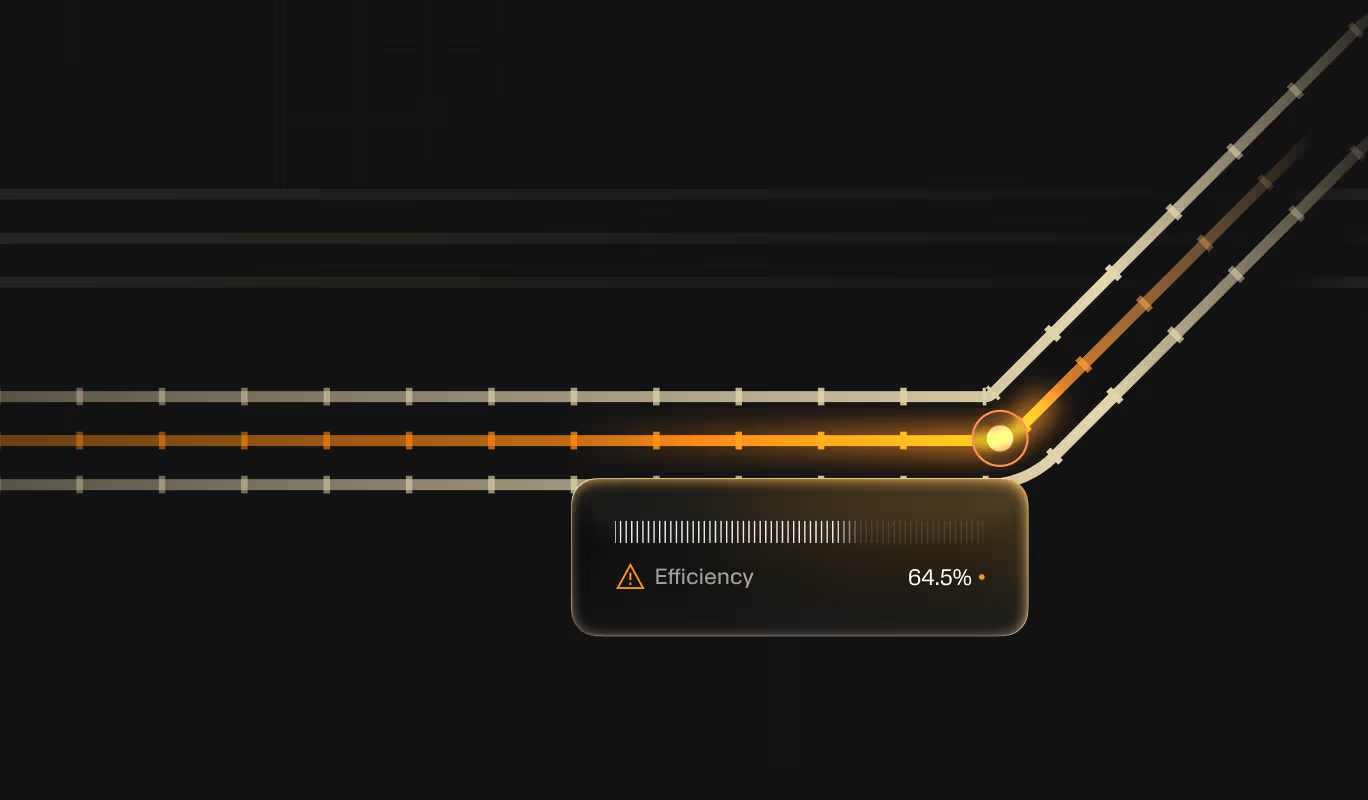
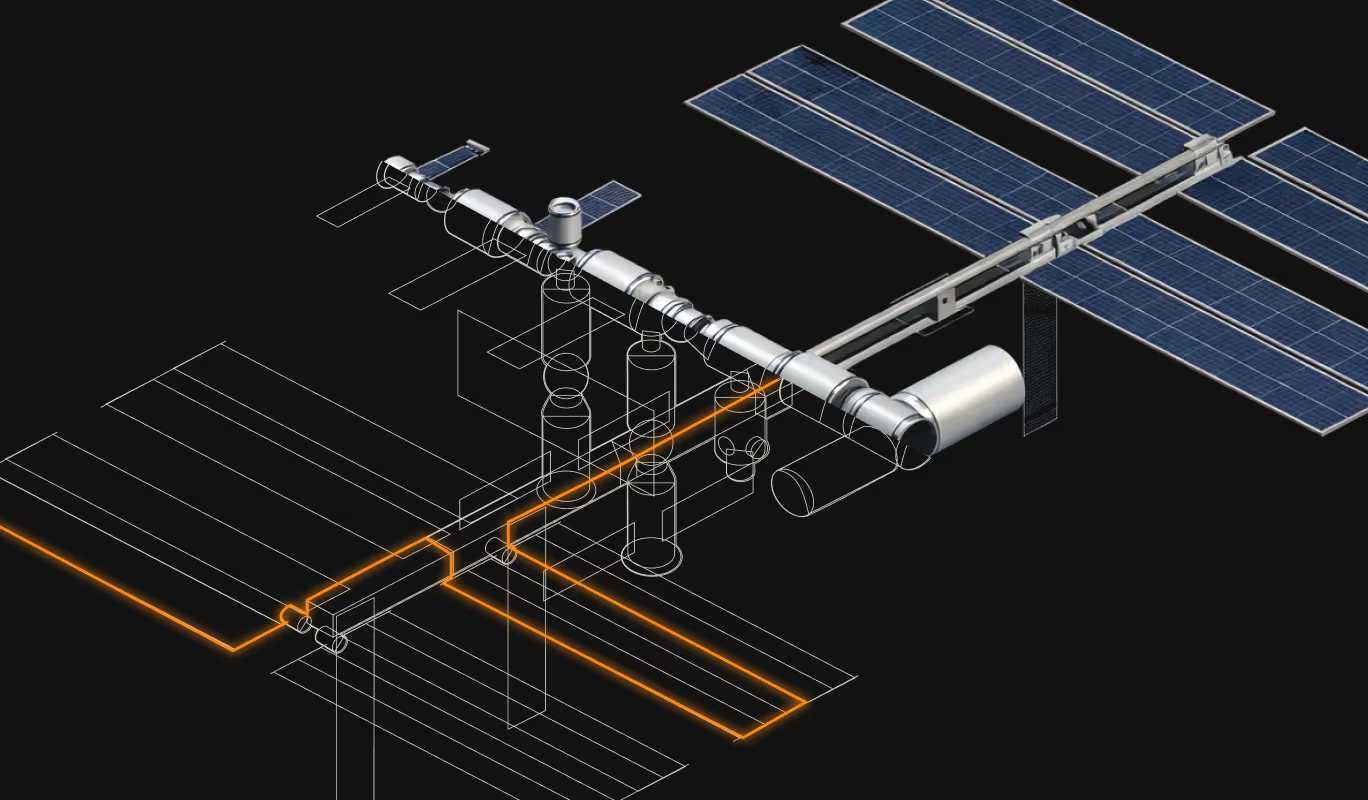
our vision
The systems that power the world should not rely on approximation and guesswork.
We are working toward a future where every critical system can be understood, trusted, and continuously improved.
Our Values
We believe progress comes from understanding how the world actually works.